The medical air conditioner market is booming, but compliance isn't optional—it's the barrier to entry. Healthcare facilities demand systems that meet stringent hygiene, filtration, and ventilation standards. For importers and distributors, verifying certification before shipment is the difference between a successful delivery and a rejected container at the port.
Medical air conditioners fall into several product categories, each with distinct compliance requirements. The most rigorous standards apply to systems serving operating rooms, ICUs, and sterile processing areas. Certification frameworks such as Eurovent's Hygienic Air Handling Unit (HAHU) program classify units into three levels: Level 2 for hospitals and healthcare, and Level 3 for operating rooms and cleanrooms, requiring compliance with VDI 6022-1 and DIN 1946-4 standards.
The North American market operates under CSA Z317.2, the standard for HVAC systems in healthcare facilities. This covers planning, design, commissioning, and maintenance, with more stringent requirements than non-medical applications. Importers shipping to Canada or the U.S. should verify that the manufacturer's documentation references current CSA Z317.2 compliance.
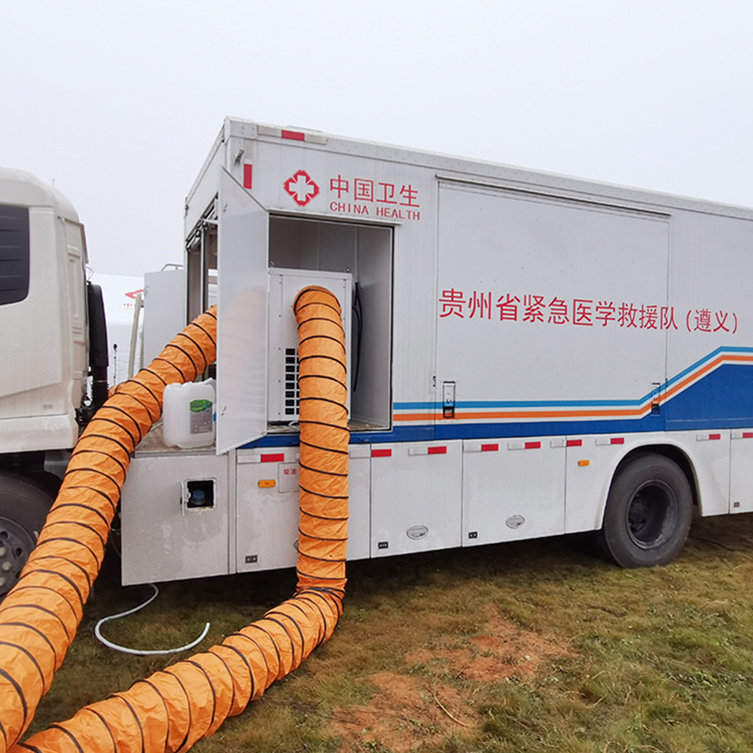
Tent-based medical facilities—field hospitals, mobile clinics, and emergency response units—require specialized equipment. Mobile field hospital air conditioners typically incorporate HEPA filtration to reduce airborne contamination in temporary medical settings. Units designed for tent air conditioner applications must operate in extreme conditions, often from -32°C to +58°C, while maintaining filtration standards compliant with DIN 1946.
For importers evaluating tent air conditioner products, the certification checklist should include:
- Filtration class: F7 or higher for medical applications
- Refrigerant type: R410A or R134a compliant with regional regulations
- Voltage and frequency: 3-phase 380V/50Hz or 208V/3ph/60Hz depending on destination
- Corrosion protection: Minimum 80μm powder coating for outdoor deployment
Beyond standalone units, the ECU Environmental Control Unit concept applies to integrated climate systems. An ECU goes beyond basic air conditioning, incorporating ventilation, humidity control, and filtration into a coordinated platform. For healthcare facility compliance, the ECU must demonstrate the same certification levels as dedicated medical AC systems.
Importers should insist on documented evidence of third-party certification. Eurovent certification, in particular, verifies both manufacturing quality and hygienic characteristics through annual factory audits. Without this documentation, the product cannot be installed in a regulated healthcare environment.