Anyone who's spent time in a forward operating base during a Middle Eastern summer knows the math doesn't work in your favor. Ambient temperatures push past 50°C. The sun beats down on canvas and synthetic fabrics for fourteen hours straight. Inside a tent, without active cooling, temperatures can soar to 65°C or higher—well beyond what human physiology or sensitive electronics can tolerate.
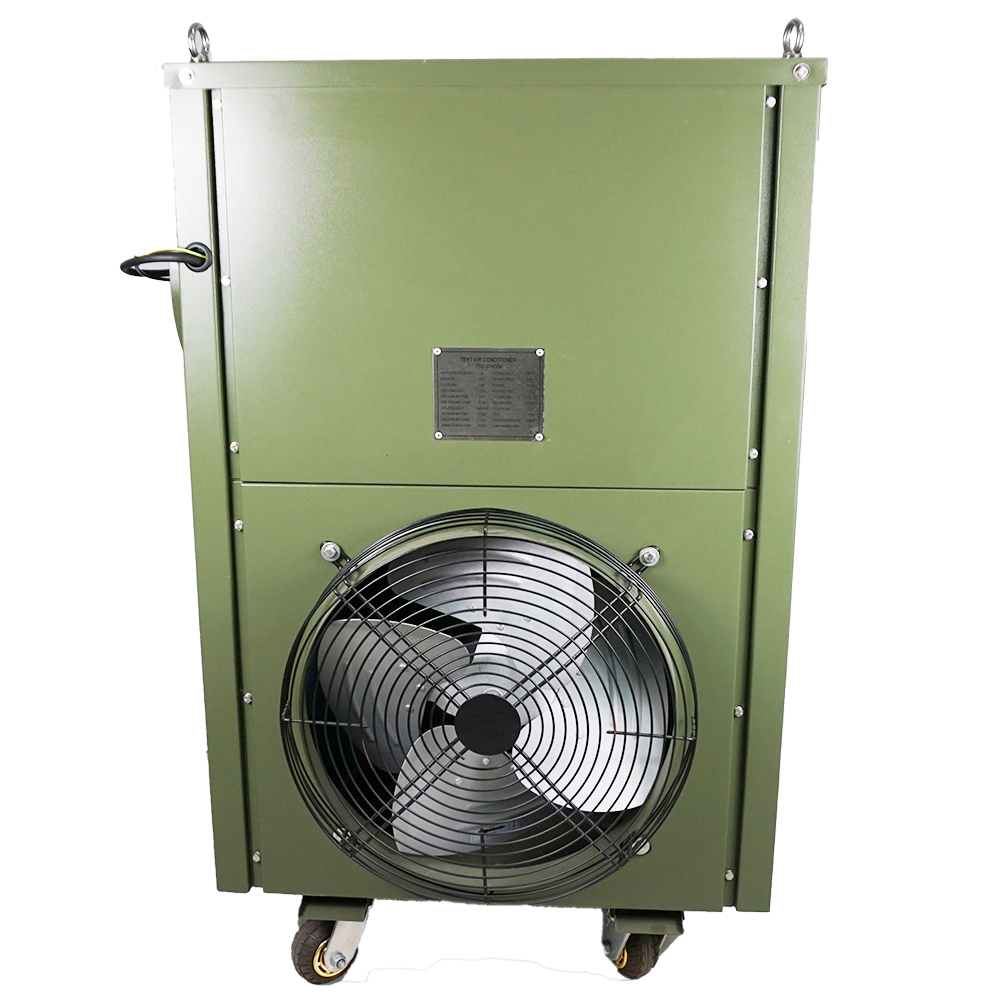
That's the problem the Military Tent Air Conditioner is built to solve. These aren't off-the-shelf portable ACs with a coat of tan paint. A proper military-grade unit must deliver sustained cooling at ambient temperatures up to 55°C while withstanding dust, sand ingress, vibration from transport, and the kind of abuse that would kill a commercial unit in weeks. The 10,000 BTU class—roughly 3 kW of cooling capacity—has emerged as the sweet spot for medium-sized tactical shelters, field hospitals, and command posts.
What sets a Tent Air Conditioner apart from its commercial cousins? Start with the compressor. Military-spec units use scroll compressors rather than cheaper rotary designs, delivering reliability under continuous high-load operation in extreme heat. The housing is built from corrosion-resistant materials—hot-dip galvanized steel with powder coating, or stainless steel and high-grade aluminium—to survive sandstorms and salt-laden coastal air. Operating ranges typically span from -32°C to +58°C, meaning the same unit that cools a desert command post can heat a mountain outpost in winter.
Then there's the ECU Environmental Control Unit—the military's term for what civilians call an HVAC system. An ECU isn't just an air conditioner; it's a complete climate control package that manages temperature, humidity, and air quality within expeditionary structures. The U.S. military's Improved Environmental Control Units (IECUs), for instance, span capacities from 9,000 to 60,000 BTU/hour and are ruggedized for battlefield conditions. They're designed to be transported on pallets, stacked for shipping, and deployed by a single person without tools.
For a logistics officer managing a field hospital in 50°C heat, the choice of cooling equipment isn't academic. A 10,000 BTU Military Tent Air Conditioner—properly specified, properly maintained—keeps the operating theatre at 24°C while the desert bakes outside. It protects the IV fluids from degrading and the surgical instruments from malfunctioning. More importantly, it keeps the medical team functioning when every other metric says they shouldn't be. That's not comfort. That's mission capability.