Let us get straight to the point: field conditions do not forgive equipment failures. When you are sourcing tent air conditioners for defense contracts—whether for forward operating bases, field hospitals, or command posts—the stakes are higher than a commercial HVAC purchase. One failed unit in a 50°C desert environment can compromise an entire mission. Here is what procurement buyers actually need to know.
Know the Difference: Tent AC vs. ECU
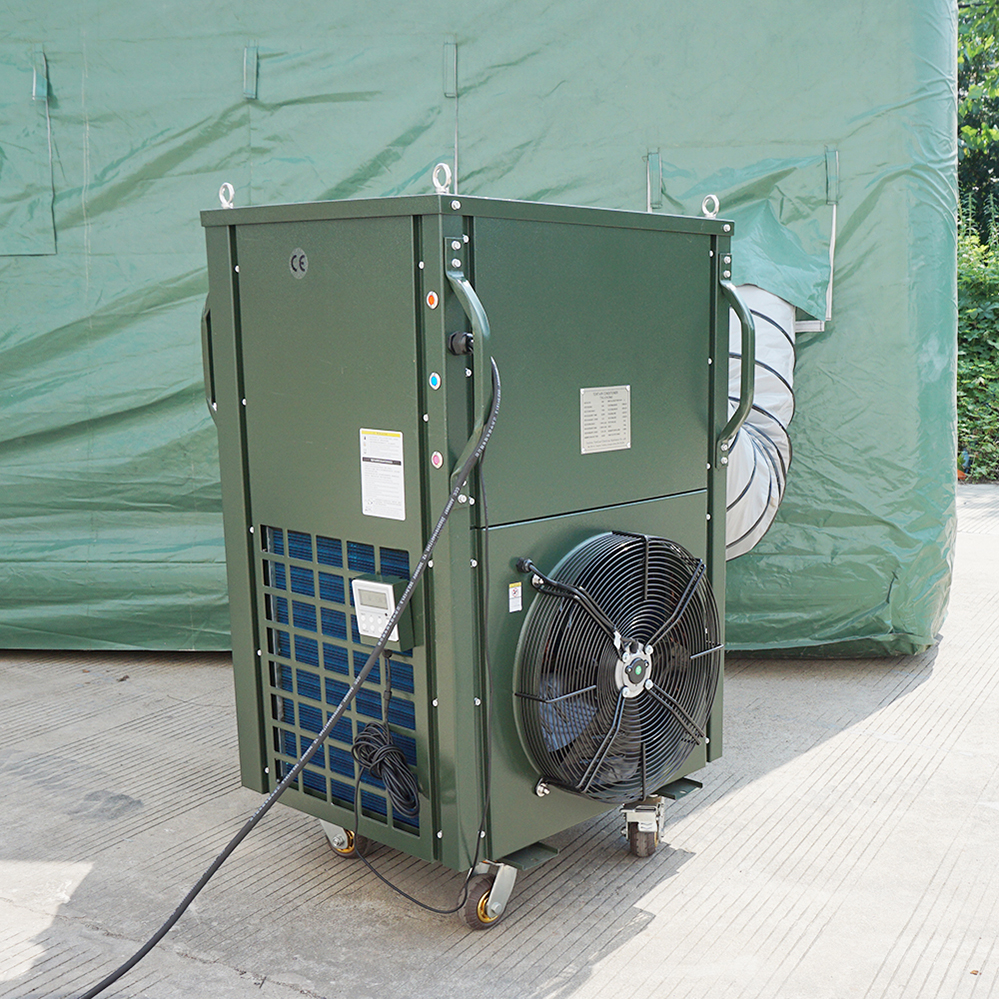
The military does not call these units "air conditioners." They are Environmental Control Units—ECUs for short—and that distinction tells you everything about their design philosophy. Unlike commercial HVAC systems rated for mild conditions, ECUs must operate in ambient temperatures from -51°C to +60°C while surviving transport by air, land, and sea. A military tent air conditioner is not just a cooler; it is a ruggedized, transportable system built to MIL-STD-810 standards for shock, vibration, dust, and moisture.
For tent applications specifically, you are typically looking at cooling capacities ranging from 2.5 tons (about 9,000 BTU/h) up to 10 tons for large shelter systems. The current procurement trend favors Improved Environmental Control Units (IECUs) that use zero-ozone-depleting refrigerants—a compliance requirement that should be non-negotiable in your specification sheet.
What to Verify Before Signing
Temperature range. Ask the supplier for documented test results confirming operation across the full spectrum your deployment requires—not just a brochure claim. Units that pass at -32°C to +55°C are considered industry-standard for field camps.
Stackability and logistics. When you are shipping 250 units to a theater of operations, pallet efficiency matters. The best ECUs stack four high on standard 463L aircraft pallets. If your supplier cannot confirm transport configurations, you are looking at hidden freight costs.
Power compatibility. Military operations span 50Hz and 60Hz grids. Ensure your supplier offers both configurations or units that accept dual-frequency input.
Red Flags to Watch
Suppliers who offer the same grade for every application. A tent air conditioner for a medical shelter requires different dehumidification performance than one for a communications hub with sensitive electronics. If the manufacturer cannot discuss application-specific specifications, move on.
Inconsistent batch quality. Bulk orders demand consistency. Require sample units from at least three production batches before committing to volume—the same principle applies here as with any precision equipment.