Extreme weather is no longer a seasonal anomaly—it is a persistent operational reality. From desert heat exceeding 55°C to arctic cold plunging below -30°C, military forces, emergency responders, and field operations face climate conditions that directly affect personnel performance, equipment reliability, and mission outcomes. The response has been a new generation of Environmental Control Units (ECUs) engineered to maintain habitable conditions across the full spectrum of global climates.
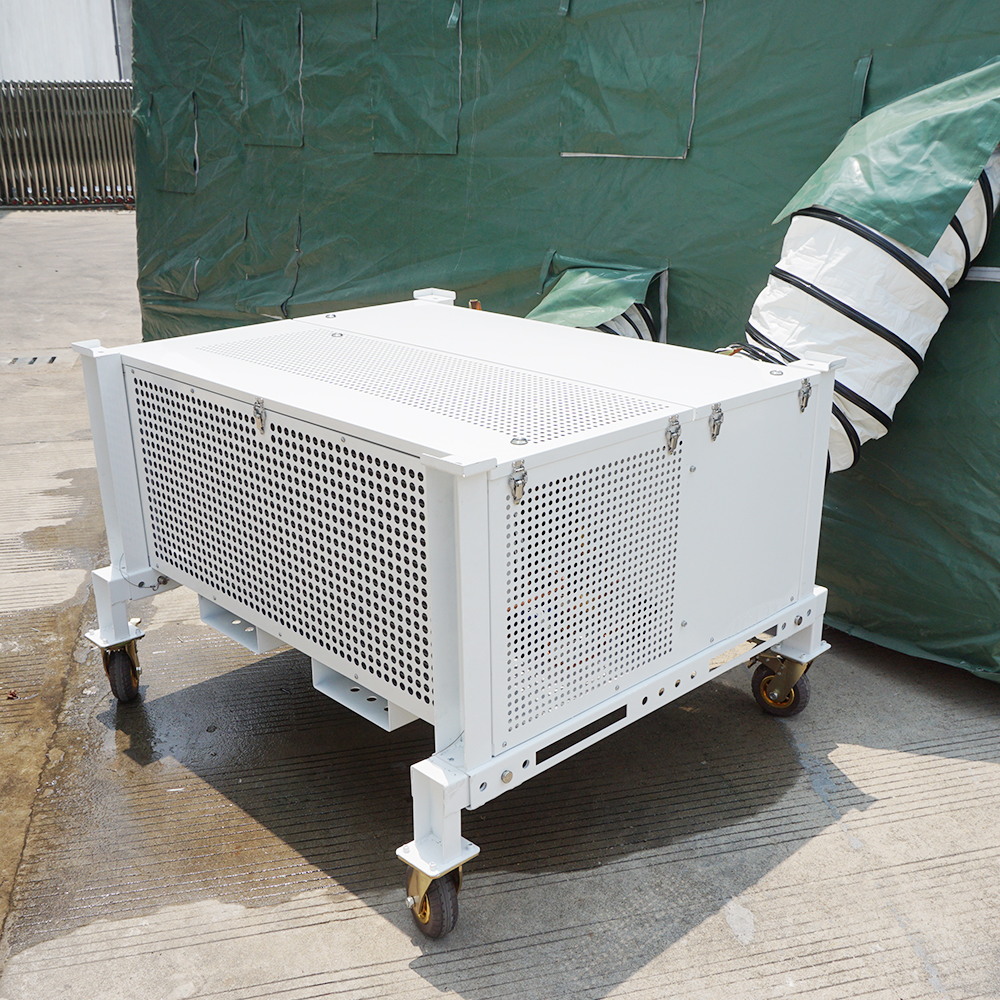
The ECU is a mobile, self-contained climate control system designed for deployable shelters, containers, and temporary structures. Unlike fixed HVAC infrastructure, these units are built for rapid deployment: positioned outside rigid or soft-walled shelters and connected through flexible supply and return ducts, they deliver reliable climate control in demanding and remote environments. The technology is proven. Dantherm's AC-M25 tent cooler, for instance, provides 93,000 BTU of cooling and 16 kW of electric resistance heating, maintaining stable interior temperatures of 68–77°F (20–25°C) in ambient conditions ranging from -26°F to +131°F (-32°C to +55°C). Its cooling circuit integrates a high-reliability scroll compressor and microchannel condenser coils to ensure dependable performance in extreme climates.
The same engineering logic applies across the broader category of tent air conditioners. Thermo Projects Ukraine recently introduced the BOREY TENT 120 NG mobile air conditioner, a system that provides cooling, heating, and ventilation for tents and field hospitals with volumes up to 60 m³. It delivers 11 kW of cooling capacity and 12 kW of heating capacity, using high-quality European components to guarantee performance in demanding field conditions. Other ECUs are tested to maintain 20°C to 26°C in regions with ambient temperatures ranging from -19°C to +49°C, with aluminum construction that avoids rust and keeps unit weight under 255kg.
The military tent air conditioner segment is where these capabilities are most rigorously tested. Units must comply with MIL-STD-810 standards for environmental durability, ensuring long-term performance in desert, arctic, and tropical conditions. The U.S. Marine Corps, for example, specifies 3-ton (36,000 BTU/hr) and 5-ton (60,000 BTU/hr) ECUs as packaged systems designed to provide conditioned air to shelters and vans.
The global ECU market reflects this growing demand, projected to expand from $7.73 billion in 2025 to $12.4 billion by 2035. As extreme weather events become more frequent and operational environments grow more demanding, the ECU has shifted from a convenience to a mission-critical capability—one that ensures personnel can perform, equipment can function, and operations can continue, regardless of what the weather delivers.