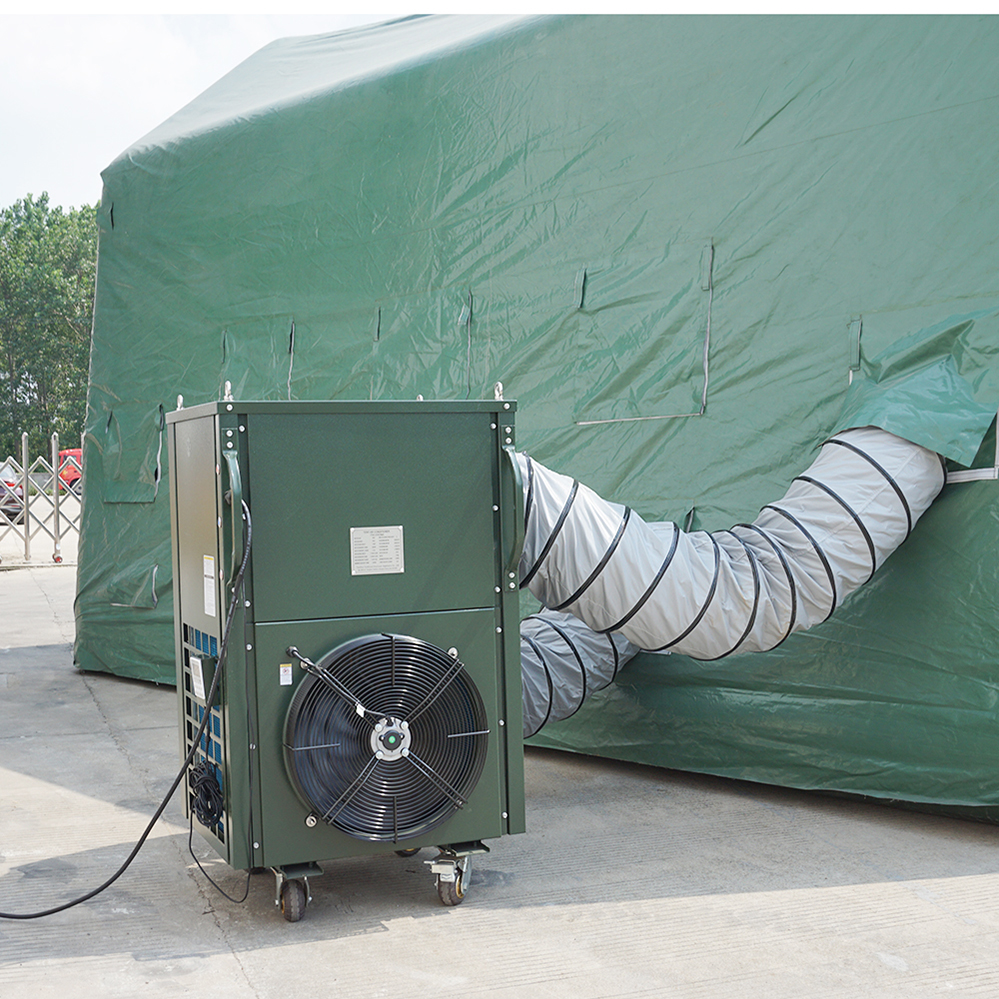
The new Military Tent Air Conditioner is rewriting the rules of base camp livability. Unlike commercial portable units that falter in sandy, 120°F environments, these systems are built for extremes—armored compressors, corrosion-proof coils, and fuel-efficient diesel engines that run silently enough to avoid drawing unwanted attention. The difference isn't just comfort; it's operational readiness. Sleep-deprived soldiers make mistakes. Cooler troops make better decisions.
What sets this generation apart is intelligent load management. Traditional units ran full-blast or not at all, wasting precious fuel and burning out filters within days. The latest Tent Air Conditioner platforms use variable-capacity scrolling technology that matches cooling output to real-time conditions—sun beating down at noon? Full power. Desert night dropping 40 degrees? It dials back automatically. The result: 40% less fuel consumption and triple the service life between overhauls.
But the real breakthrough lies in the ECU Environmental Control Unit integration. This isn't a standalone cooler; it's a modular command center that mounts onto standard shipping containers and daisy-chains up to six tents simultaneously. One ECU handles cooling, heating, and dehumidification while feeding diagnostic data back to maintenance crews via satellite link. If a sensor detects refrigerant loss or voltage drop, the unit self-adjusts or flags the issue before a failure occurs.
The numbers speak for themselves. Field tests in the Mojave Desert recorded internal tent temperatures 28°F lower than ambient, with humidity kept below 55%—all while using 30% less energy than previous-generation systems.
Comfort is no longer a morale booster. It is a strategic asset. And with the new Military Tent Air Conditioner leading the charge, base camp finally feels like a place to rest—not just endure.