1. Operational Temperature Envelope
Commercial coolers fail at 125°F ambient. Tactical-grade ECU Environmental Control Unit systems are MIL-STD rated to deliver full BTU capacity in extreme heat, sandstorms, and high humidity. If the spec sheet doesn’t show performance curves at 52°C, reject it. Your personnel cannot wait for a mid-mission breakdown.
2. Power Logistics Are Non-Negotiable
Forward bases run on limited generator fuel. Modern inverter-driven ECUs cut power draw by 40% compared to fixed-speed models, using variable refrigerant flow to match real-time load. This directly reduces resupply convoys—a tactical and cost advantage.
3. Durability Under Transport
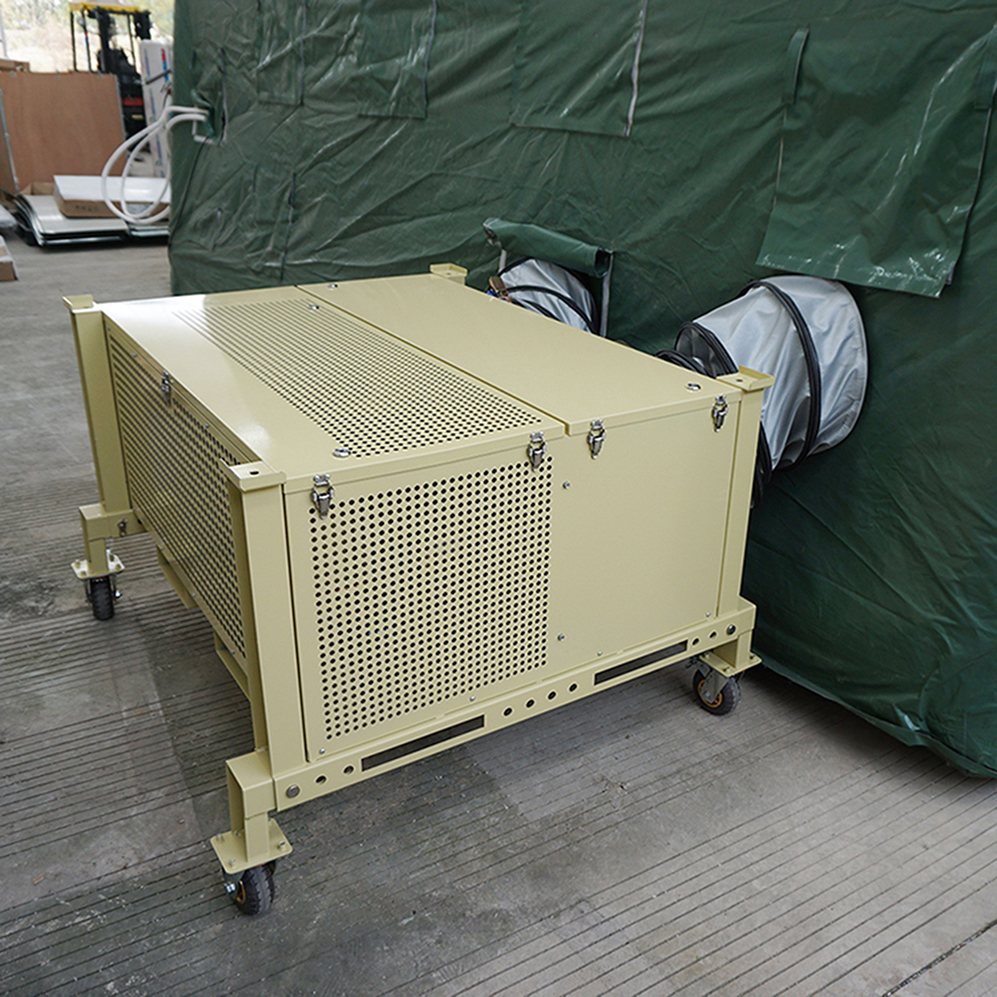
These units endure airdrops, convoy vibrations, and salt-spray exposure. Look for integrated forklift skids, recessed fittings, and corrosion-coated coils. Field reports show that properly hardened ECU Environmental Control Unit systems outlast consumer-grade alternatives by a 3:1 margin in forward operating environments.
4. The Mobile Shelter Reality
For rapid deployment, a standalone cooler is useless without proper integration. The most effective setups pair the ECU with a Military Tent Air Conditioner distribution plenum that eliminates cold spots and condensation pooling. This ensures even airflow across 40-foot expandable shelters, preventing electronics overheating and crew fatigue.
5. Common Mistakes with Tent Air Conditioner Specs
Many officers mistakenly size a standard Tent Air Conditioner based on square footage alone. In reality, solar gain, fabric insulation (or lack thereof), and equipment heat load must be calculated. A 36,000 BTU unit may underperform on a black-out tent in direct sunlight unless it features a dual-stage filtration and hot-gas bypass for dehumidification.
The bottom line: never award a contract without verifying third-party test data under military load profiles. The cheapest bid often becomes the most expensive repair. Prioritize modular designs, quick-connect fittings, and 24/7 field-support availability. Mission success starts with the spec sheet—choose wisely.