Here are three airflow mistakes that cause nighttime overheating.
Mistake 1: Recirculating Hot Air from the Condenser
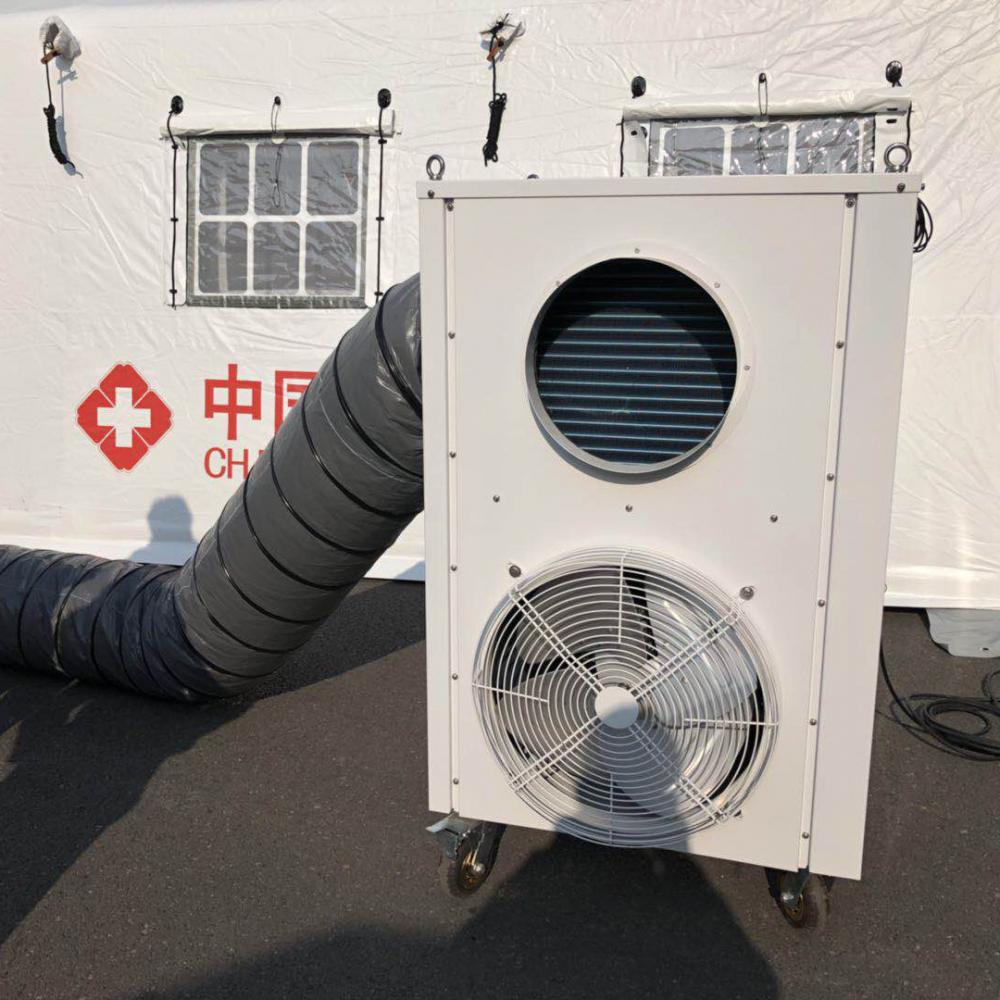
A Tent Air Conditioner needs fresh air for the condenser to dump heat. If the condenser intake is inside the tent or too close to the tent wall, the unit sucks in its own hot exhaust. The compressor runs harder, gets hotter, and finally trips a thermal switch. The ECU Environmental Control Unit shuts down, and the tent heats up. Fix: duct the condenser intake and exhaust to the outside. Keep at least 3 feet between the intake and exhaust ducts.
Mistake 2: Blocked Return Air Path
A Mobile Field Hospital & Medical Air Conditioner pulls warm air from the tent through a return grille. If stretchers, supplies, or IV poles block that return, the unit starves for air. The evaporator coil ices up. Airflow drops to a trickle. The tent gets humid and warm. Keep a 2‑foot clear zone around the return grille at all times. Mark the floor with tape.
Mistake 3: Collapsed or Kinked Supply Duct
Flexible ducts are easy to deploy but easy to crush. A single soldier stepping on the supply duct can reduce airflow by 50%. The cold air never reaches the far end of the tent. Walk the entire duct run every shift. Replace any duct with a kink or a flat spot. Use rigid elbows at sharp corners.
The 3 AM Test
Set your Tent Air Conditioner to 72°F. At 3 AM, check the supply air temperature at the duct outlet. It should be 15‑20°F cooler than the return air. If the difference is smaller, you have an airflow problem, not a refrigerant problem.
Your Mobile Field Hospital & Medical Air Conditioner can handle extreme heat – if the air can move. Clear the returns, duct the condenser outside, and protect your supply ducts. Your patients and staff will sleep better. So will you.